Overpronation, or pronation in general, refers to how your foot hits the ground when you walk or run, which you may not consider.
However, regarding Overpronation, you may find that some foot and health issues may stem from this.
Generally, Motion Control and stability feature shoes are prescribed for Overpronation. Highlighting their role in supporting foot health can motivate the audience to choose the right footwear.
If you have a foot condition or ongoing foot pain, talk to a doctor or podiatrist. Shoes can add comfort and support, but they are not a medical treatment.

Overpronation and Issues Related to It
When you walk or run, you make the motion so many countless times each day that you may not have considered the specific mechanics that go into it and how your feet push off and hit the ground.
The way you step does matter when you partake in sports like running, as it may affect your health.
One way your feet may move when you walk or run is called Overpronation. Overpronation occurs when your feet roll inward excessively as you move.
The outer edge of your heel will hit the ground first, your foot rolls inward onto your arches, and then the arch of the foot will flatten and stretch, which causes strain in your tendons and ligaments.
This can lead to the risk of suffering an ankle strain or sprain, shin splints, Achilles tendinitis, heel spurs, or plantar fasciitis, which can cause heel pain.
- Causes – Overpronation usually occurs in individuals with a flatter-than-normal foot type, and it can cause your feet and arches to flatten.
- How to Know if You Overpronate – The quickest and easiest way to tell if you overpronate is to check the bottom of your shoes for any wear and tear, If there is plenty of wear and tear on the inside sole near the ball of the foot area and the big toe, the possibility is there that you are overpronating. Your shoes may appear to tilt inward when viewed on a flat surface. You can also look at your bare feet. Are your arches low or flat? Most people with lower and flat arches Overpronate. Many individuals who overpronate will have heel or arch pain, and they may have hip and back pain in turn.[1] They may also have corns and calluses on their feet. You can essentially look at your shins and follow the line of the shin bone from your knee to your ankle; if the line leads towards the inside portion of your foot, you are overpronating; if it leads to your first or second toe, you have normal pronation.[2]
- Issues Caused By Overpronation – Overpronation itself can cause other issues and conditions. It may cause Achilles tendinitis, a strain of the Achilles tendon that causes inflammation. You may feel heel pain or have Plantar Fasciitis, which can also cause it. Bunions may develop because your feet press against your shoes while you walk. Shin Splints are also a common condition among individuals who overpronate. Furthermore, you may suffer hip, knee, and sometimes even back pain.
- Using the right footwear that supports your arches can empower you to manage overpronation effectively, giving you confidence in your foot health and reducing discomfort.
- Managing Overpronation Symptoms – You may get some comfort from overpronation symptoms by using orthotic inserts and insoles. Otherwise, you can invest in proper shoes for Overpronation, usually stability shoes.
Shoes for Overpronation
Shoes for Overpronation typically feature a firmer heel counter and wider sole base, which can help you feel more secure and confident in your foot stability.
-If you overpronate moderately, a stability shoe will usually suffice. For very severe overpronation, a Motion Control shoe is recommended. Knowing your level helps you feel supported and confident in selecting appropriate footwear.
Most people opt for neutral shoes that are lightweight, flexible, and have no specific features except some cushioning.
However, with overpronation in mind, shoes are designed to support your arch and offer better support throughout the midsole, extending to the heel; they are usually stiffer and heavier than neutral running shoes.[3]
Motion control shoes are for severe overpronators or those who are overweight and have very flat feet. They have a supportive heel cup, arch support, and other features that help keep your feet from rolling during every step.
Features of a Good Dress Shoe for Overpronation

- Arch Support – Good shoes for Overpronation will have a contoured or supportive midsole that properly supports the foot’s arch.
- Firmer Sole – The sole should be firmer and less flexible, with a durable rubber outsole.
- Fit – Look for shoes with a more secure arch fit and heel fit, a deeper heel cup, and enough toe room.[4]
- Uppers – Most dress shoes will have leather or synthetic leather uppers. Or fabric uppers such as velvet and nubuck.
- Stability – Look for shoes with stability and motion control features.
- Cushioning – Some lightweight cushioning is needed to absorb impact.
Key Specs Compared
Numbers match the reviews below (tap to jump).
| No. | Shoe | Type | Upper | Closure |
|---|---|---|---|---|
| 1 | Clarks Sillian Paz / Wave Edge (men's) | Loafer | Nubuck | Slip-on |
| 2 | Vionic Raysa Toe Post / Tide (men's) | Sandal | Not stated | Not stated |
| 3 | Clarks Cora Daisey / Tilden Free (men's) | Loafer | Leather | Slip-on |
– = not stated on the Amazon listing. Specs as stated by the listing, not tested by us; check the listing before you buy.
Reviews: The Best Dress Shoes for Overpronation
These are some of our best dress shoe choices for individuals who tend to overpronate.
1
Dress Shoe for Overpronation


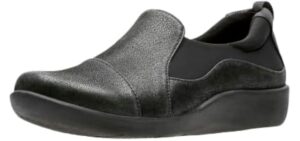
- The Sillian Paz features a Cushion Soft midsole and OrthoLite footbed with a contoured design for support and cushioning.
- They have stretchable uppers and a rubber outsole.
- The shoes have a firmer sole for stability.
- The Wave Edge has a Cushion Plus midsole and OrthoLite footbed for support and cushioning.
- The leather shoe features a firmer synthetic sole for support and stability.
2
Supportive Sandal for Warm Days


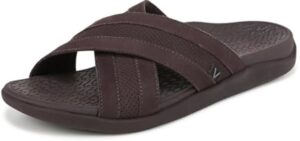


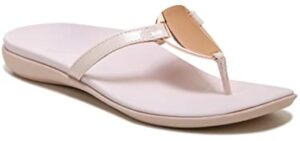
- Open toe sandal designed with leather trim.
- Patterned tread provides traction across a range of surfaces, helpful on the surfaces you meet during everyday wear.
- Lightweight, flexible EVA midsole absorbs shock, reducing stress on feet, ankles, and knees, a useful trait in dress shoes for overpronation.
- Durable TPR outsole with patterned tread helps improve traction, helpful on the surfaces you meet during everyday wear.
- Men’s and women’s versions are listed separately on Amazon, each with its own size range.
- Check the Amazon listing for current colors and size availability before you order.
- Compare the size chart on the listing, since fit can vary between colorways and versions.
3
Leather Loafer for Everyday Wear


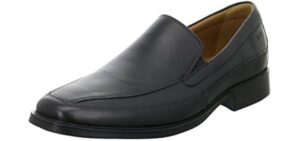


- Ortholite Footbed, Smooth Textile Linings, Durable TPR Outsole, a practical detail for everyday wear.
- Delivering a look that works at the office and casual get-togethers, the Tilden Free loafer from the Clarks Collection is a must for any wardrobe.
- Stretch Gore Panels for a Flexible Fit, worth noting if fit is a priority for dress shoes for overpronation.
- Ortholite footbed that softens impact and wicks away moisture, which helps keep long stretches of everyday wear comfortable.
- Soft Themoplastic Rubber outsole provides comfort all day, a useful trait in dress shoes for overpronation.
- Men’s and women’s versions are listed separately on Amazon, each with its own size range.
- Check the Amazon listing for current colors and size availability before you order.
Index Table: Top Rated Dress Shoes for Overpronation
| No. | Shoe | Men ♂ | Women ♀ | Features | Brand |
|---|---|---|---|---|---|
| 1 | Clarks® - Dress Shoe for Overpronation |  | 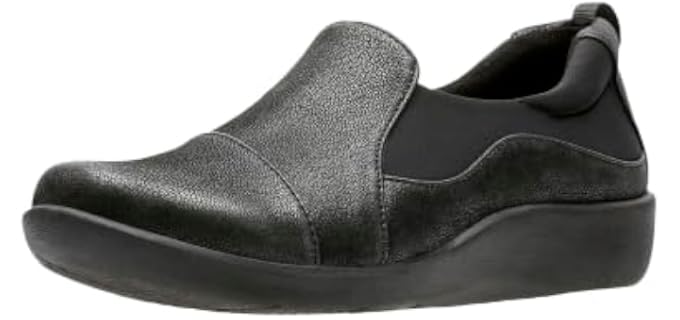 |
| Clarks |
| 2 | Vionic® - Supportive Sandal for Warm Days | 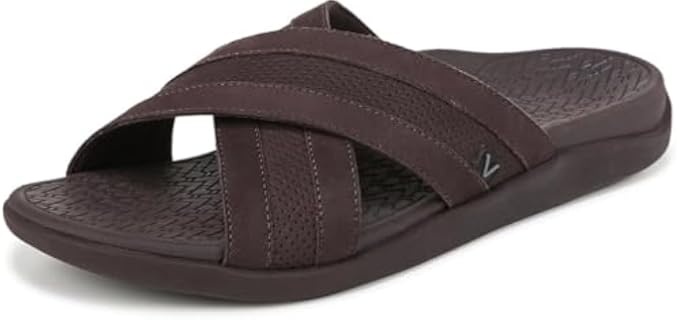 | 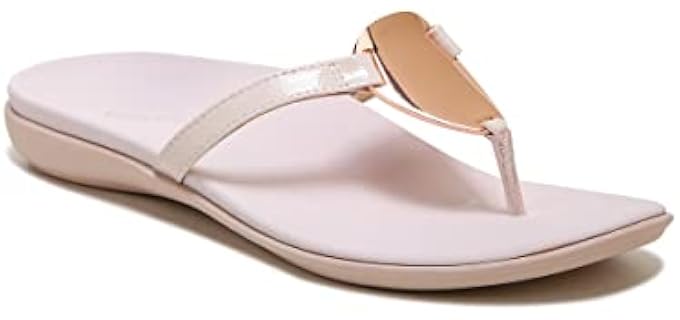 | Vionic | |
| 3 | Clarks® - Leather Loafer for Everyday Wear | 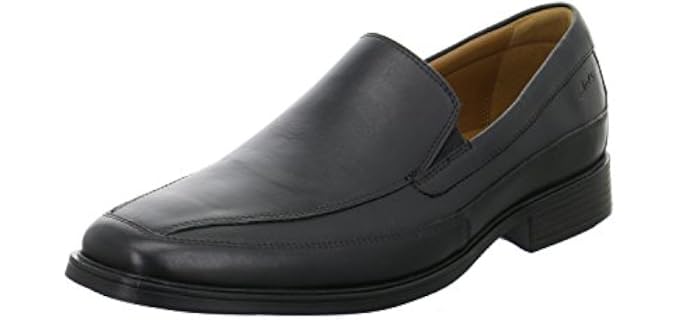 |  |
| Clarks |
Sources
General background on foot health and footwear. This is not medical advice; see a doctor or podiatrist about foot pain or a foot condition.
- Cleveland Clinic: Flat Feet (Pes Planus)
- Cleveland Clinic: Overpronation
- American Podiatric Medical Association: Which Running Shoe is Right for You?
- American Academy of Orthopaedic Surgeons (OrthoInfo): Athletic Shoes
Update History
- Oct 2026: Updated Vionic Peony to Vionic Raysa Toe Post
- Oct 2026: Updated Clarks Cora Daisey to a current in-stock listing
- Oct 2026: Removed Hush Puppies Pleats Be With You, Orthofeet Chelsea and Orthofeet Gramercy (unavailable)
- Nov 2022: First published
Views: 49
