Peroneal tendinitis is a painful condition that is found mostly in athletes. Proper supportive footwear that provides a more structured fit for your foot and ankle can help ease the discomfort of the condition and lower the risk of it coming back.[1]
Asics shoes for Peroneal tendinitis offer a structured fit and support system, with good underfoot cushioning to prevent hard impact on your feet and ankles.
If you have a foot condition or ongoing foot pain, talk to a doctor or podiatrist. Shoes can add comfort and support, but they are not a medical treatment.

Peroneal Tendinitis Facts
Peroneal tendinitis occurs when your Peroneal Tendons become inflamed or damaged because of an increased load on them or overuse of the tendons, which then leads to the tendons rubbing against the bone, causing them to swell.[2]
Over time your Peroneal tendons may thicken to manage increased load and activity more efficiently.
Peroneal tendinitis is more prevalent in athletes, especially runners, because their feet tend to roll outwards more, which causes friction on the Peroneal Tendon and bone.
- Causes – Individuals who participate in sports or activities involving repetitive ankle motion are most likely to get Peroneal Tendinitis. Runners and athletes who wear unsupportive footwear and have improper training techniques are at risk. Increasing your routine intensity or length suddenly also poses a risk. Some individuals with higher than normal arches or lower limbs that are unbalanced and do not work well together are more prone to get Peroneal tendinitis.
- Symptoms – Peroneal Tendinitis can come suddenly or gradually. You may feel pain at the back of the ankle that will get worse during activity. There may be a pain when you turn your foot in or out and swelling at the back of the ankle. They may feel warm to the touch, and you may feel unstable on your ankles when you bear weight on them.
- Treatment – If You have Peroneal tendinitis already, it is important to take a break from strenuous exercise or running. You can use ice or heat for the pain and prescription medications. There are also braces available that help, or cortisone injections.
- Prevention – Supportive footwear that supports and cushions your feet and ankles can help lower the risk of Peroneal Tendinitis. Stretching your calf and peroneal muscles before running and resting when inflamed will also help.[3] You must gradually increase your workload and intensity and maintain a certain activity level, especially during recovery.
Choosing Shoes for Peroneal Tendinitis
Here are a few aspects to consider in a good shoe for Peroneal tendinitis;
- Heel-to-Toe Drop – Consider a shoe with a higher heel-to-toe drop to encourage a heel strike rather than a forefoot or midfoot strike.
- Cushioning – Ensure that the shoe has full cushioning or cushioning more concentrated in the midfoot and forefoot area.
- Arch Support – You must select a shoe with the right arch support for your specific arch type.
- Flexible Sole – You need a better range of motion when you have Peroneal Tendinitis. Thus, a shoe with a less rigid and more flexible sole is ideal.
- Ankle Support – Look for shoes with a form of heel counter or stabilizer that offers a more secure heel fit to limit ankle motion and twisting.[4]
Features of a Good Asics Shoe for Peroneal Tendinitis

- Uppers – Asics have different options concerning the upper construction of their shoes. They have engineered knit or mesh options that are breathable and flexible and Jacquard or circular mesh and knit options that are more flexible. For Peroneal tendinitis, you want a shoe that has a secure fit with a padded foam collar.
- Insole – Asics shoes have a removable insole with a sock liner design like their Ortholite moisture-wicking sock liners.
- Midsole – There are different foam technologies that Asics use in their shoes. There is the Flytefoam midsole that has to propel technology and is a very energetic foam type for a better bounce back because it has unique elastomer compounds. The Amplifoam midsole is incredibly soft and has a lower density that will not break down easily. The latest FF Blast Plus technology is found in most of the new models and is similar to Flytefoam, a high rebound, and lightweight foam.
- Outsole – Asics shoes regularly have a rubber outsole with a high traction tread. They also have the AHAR High Abrasion-resistant rubber outsoles or trail-specific lug rubber outsoles.
- Support – In terms of support, the DuoMax support system is a Dual Density form of the midsole in the midfoot area for stability. Then there is the Propulsion Trusstic Technology creating more tension as your foot enters the propulsion stage to mimic connective tissues in your feet. The Dynawrap Technology improves stability for lateral movements. Twistruss technology allows you to be more comfortable transitioning from horizontal to vertical power without losing energy, and Litetruss technology is a stability feature in the inside angle of the midsole that helps keep your feet from rolling too far inward when walking or running.
- Options and Fit – Asics shoes are mostly available in half and full sizes, with many colorways. There are some models available in wide r narrow-width options.
Key Specs Compared
Numbers match the reviews below (tap to jump).
| No. | Shoe | Type | Upper | Cushioning (as listed) |
|---|---|---|---|---|
| 1 | ASICS Gel-Excite 11 | Running Shoe | Mesh | PureGEL |
| 2 | ASICS GT-2000 15 | Running Shoe | Not stated | PureGEL |
| 3 | ASICS Gel-Contend 10 | Running Shoe | Mesh | GEL technology |
| 4 | ASICS Gel-Quantum 360 6 | Not stated | Mesh | GEL Technology |
| 5 | ASICS DYNABLAST 6 | Running Shoe | Mesh | FF BLAST PLUS |
– = not stated on the Amazon listing. Specs as stated by the listing, not tested by us; check the listing before you buy.
Reviews: The Best Asics Shoes for Peroneal Tendinitis
In our Review Section, we have some of the best available shoe models from Asics that are all ideal for Peroneal tendinitis;
1
Cushioned Lightweight Running Shoe for Daily Miles


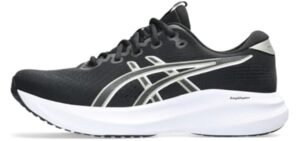


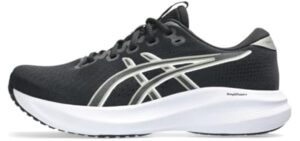
- PureGEL technology: softer, updated version of the brand’s GEL technology. Approximately 65% softer vs standard GEL technology, a useful trait in Asics shoes for peroneal tendonitis.
- Engineered mesh upper: a lightweight, breathable meshmaterial helps reduce the need for additionaloverlays, which helps feet stay comfortable through running.
- Midsole cushioning that provides a more soft and comfortable ride than standard AMPLIFOAM cushioning, a useful trait in Asics shoes for peroneal tendonitis.
- Designed to help improve visibility OrthoLite X-30 sockliner: Sockliner that provides cushioning performance and moisture management for a cooler, dryer environment, which helps keep long stretches of running comfortable.
- Designed to help improve visibility.
- Sockliner that provides cushioning performance and moisture management for a cooler, dryer environment.
- This comfortable heel tab makes the shoe easier and more comfortable to put on and take off.
2
Supportive Cushioned Running Shoe for Daily Miles


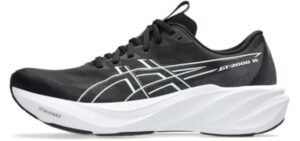


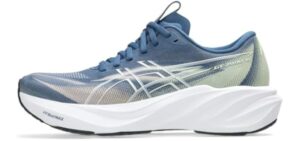
- Engineered woven upper: a lightweight, woven material that reduces the need for additional overlays, so the shoe does not feel heavy during running.
- Trampoline outsole pod: the brand’s outsole and midsole design that captures more energy return for an enhanced foam bouncing effect during toe-off, a useful trait in Asics shoes for peroneal tendonitis.
- Adaptive, on-demand stability system achieved through platform geometry and controlled deformation, the kind of support many people look for in Asics shoes for peroneal tendonitis.
- Rearfoot PureGEL technology: softer, updated version of the brand’s GEL technology that maintains the acclaimed properties that have made GEL technology famous. Approximately 65% softer vs standard GEL technology.
- FF BLAST MAX cushioning: one of the brand’s most energetic midsole foams that’s complemented with cloud-like softness and a responsive energy return in each step, which helps keep long stretches of running comfortable.
- Offers good underfoot comfort.
- ASICS’ high abrasion resistant rubber located in the heel area that is approximately three times more durable than standard outsole rubbers.
3
Mesh Gel-Cushioned Running Shoe for Daily Miles


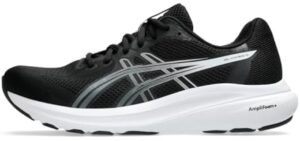


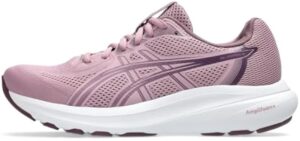
- Engineered mesh upper: a lightweight, breathable mesh material helps reduce the need for additional overlays, which helps feet stay comfortable through running.
- Shock-attenuating material placed in the midsole of the shoe for cushioning and shock absorption, which helps keep long stretches of running comfortable.
- Midsole cushioning that provides a softer and more comfortable ride than standard AMPLIFOAM cushioning., a useful trait in Asics shoes for peroneal tendonitis.
- Sockliner that provides cushioning performance and moisture management for a cooler, dryer environment (OrthoLite is a registered trademark of ATP Manufacturing LLC), which helps keep long stretches of running comfortable.
- Men’s and women’s versions are listed separately on Amazon, each with its own size range.
- Check the Amazon listing for current colors and size availability before you order.
- Compare the size chart on the listing, since fit can vary between colorways and versions.
4
Cushioned Breathable Shoe for Everyday Wear


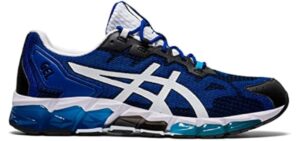


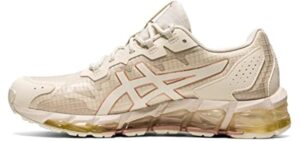
- Cushioning provides excellent shock absorption, which helps keep long stretches of everyday wear comfortable.
- Reduces the weight of the sole unit while retaining the structural integrity of the shoe, so the shoe does not feel heavy during everyday wear.
- Features 360-degrees of GEL technology-based cushioning that circulates throughout the entire midsole, providing lasting comfort and shock absorption for all-day wear during athletic activities or casual street style outings.
- Combines performance-focused design with contemporary urban aesthetics, featuring a sleek black and ASICS blue colorway that transitions seamlessly from workout sessions to everyday casual wear.
- Constructed with a breathable mesh material that promotes airflow and ventilation, helping to keep feet cool and comfortable during extended periods of wear while maintaining a modern, streamlined appearance.
- Engineered with advanced no-sew construction techniques that reduce potential irritation points and create a smooth, comfortable fit while enhancing the shoe’s durability and contemporary aesthetic appeal.
- Built with fluid technical components that work together to deliver responsive cushioning and support, making these shoes suitable for both athletic performance and everyday comfort in size 11.
5
Mesh Lightweight Running Shoe for Daily Miles


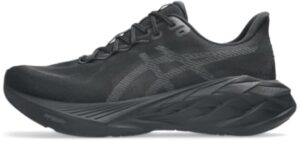


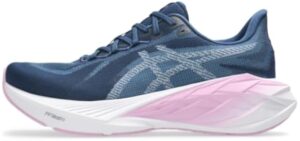
- Engineered mesh upper: a lightweight, breathable mesh material helps reduce the need for additional overlays, which helps feet stay comfortable through running.
- Midsole foam that provides a blend of cloud like cushioning and a responsive ride that is lighter than FF BLAST, a useful trait in Asics shoes for peroneal tendonitis.
- Trampoline-inspired outsole pod: the brand’s outsole and midsole design that captures more energy return for an enhanced foam bouncing effect during toe-off, which helps keep long stretches of running comfortable.
- Sockliner that provides cushioning performance and moisture management for a cooler, dryer environment (OrthoLite is a registered trademark of ATP Manufacturing LLC), a useful trait in Asics shoes for peroneal tendonitis.
- AHAR LO heel plug rubber: a lower-hardness rubber placed in key areas of the outsole for reliable grip and traction without sacrificing durability.
- Men’s and women’s versions are listed separately on Amazon, each with its own size range.
- Check the Amazon listing for current colors and size availability before you order.
Index Table: Top Rated Asics Shoes for Peroneal Tendinitis
| No. | Shoe | Men ♂ | Women ♀ | Features | Brand |
|---|---|---|---|---|---|
| 1 | ASICS® - Cushioned Lightweight Running Shoe for Daily Miles | 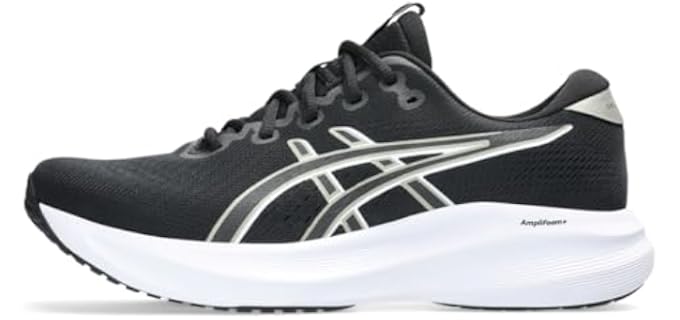 | 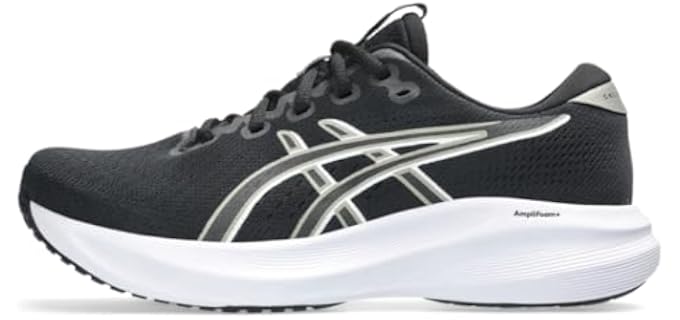 |
| ASICS |
| 2 | ASICS® - Supportive Cushioned Running Shoe for Daily Miles | 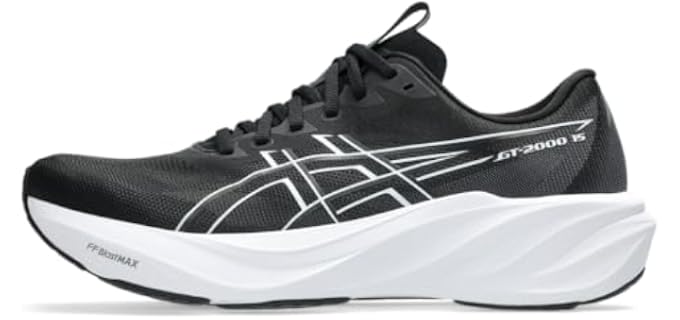 | 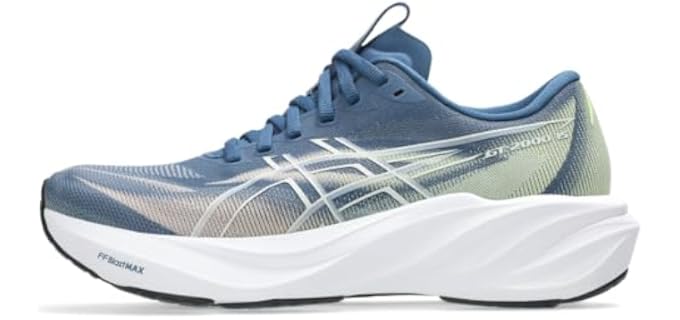 |
| ASICS |
| 3 | ASICS® - Mesh Gel-Cushioned Running Shoe for Daily Miles | 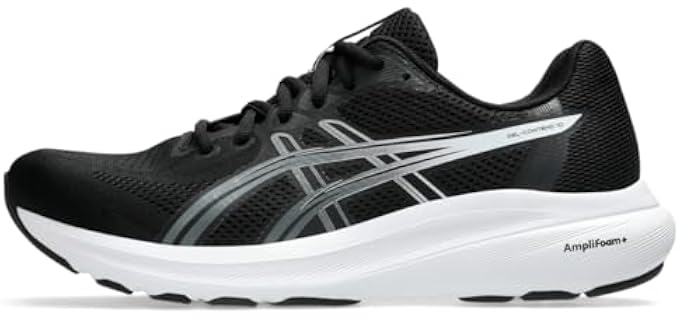 | 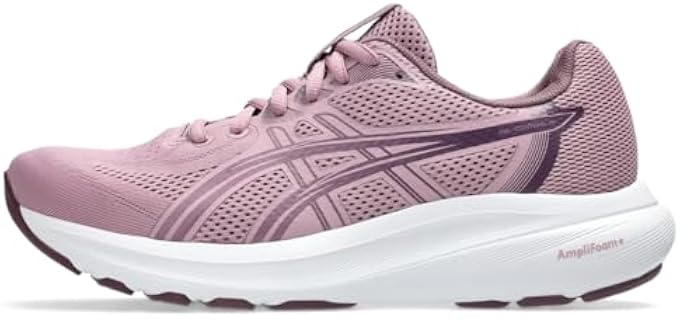 |
| ASICS |
| 4 | ASICS® - Cushioned Breathable Shoe for Everyday Wear | 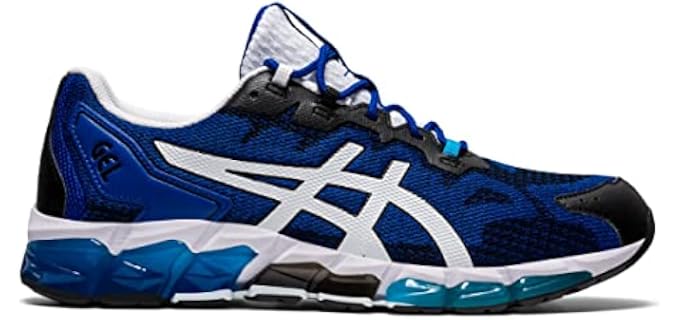 | 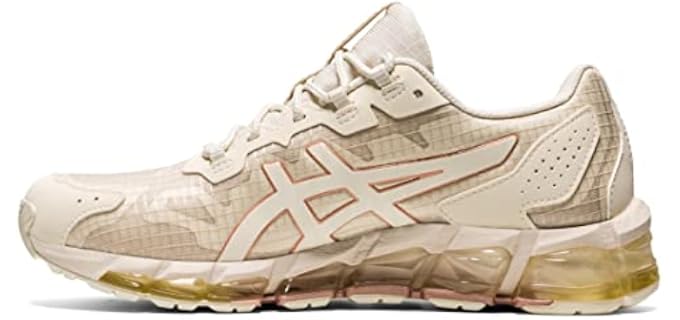 |
| ASICS |
| 5 | ASICS® - Mesh Lightweight Running Shoe for Daily Miles | 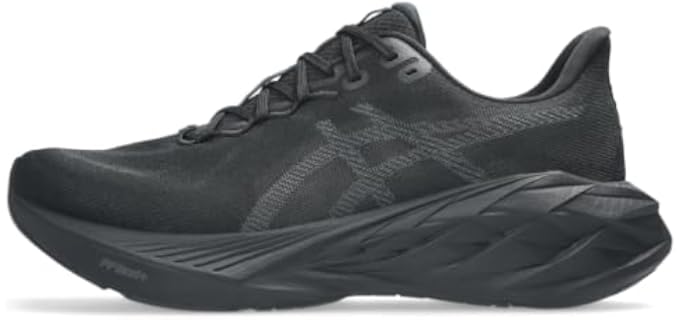 | 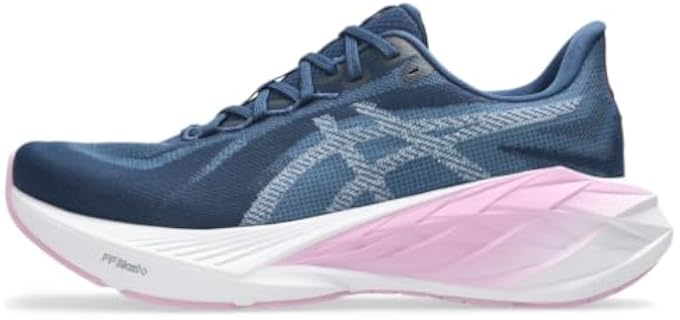 |
| ASICS |
Sources
General background on foot health and footwear. This is not medical advice; see a doctor or podiatrist about foot pain or a foot condition.
- Canadian Centre for Occupational Health and Safety: Safety Footwear
- Cleveland Clinic: Peroneal Tendonitis
- Cleveland Clinic: Foot Tendonitis
- American Academy of Orthopaedic Surgeons (OrthoInfo): Athletic Shoes
Update History
- Oct 2026: Updated Asics Gel DS Trainer to ASICS Gel-Excite 11
- Oct 2026: Updated Asics Gel Nimbus 27 to ASICS GT-2000 15
- Oct 2026: Updated Asics GT-1000 11 to ASICS Gel-Contend 10
- Oct 2026: Updated Asics Gel Kayano 29 to ASICS Gel-Quantum 360 6
- Oct 2026: Updated Asics Gel Venture 8 to ASICS DYNABLAST 6
- Oct 2026: Removed Asics Sky Elite (unavailable)
- May 2025: Added Asics Gel Nimbus 27
- Nov 2022: First published
Views: 54
